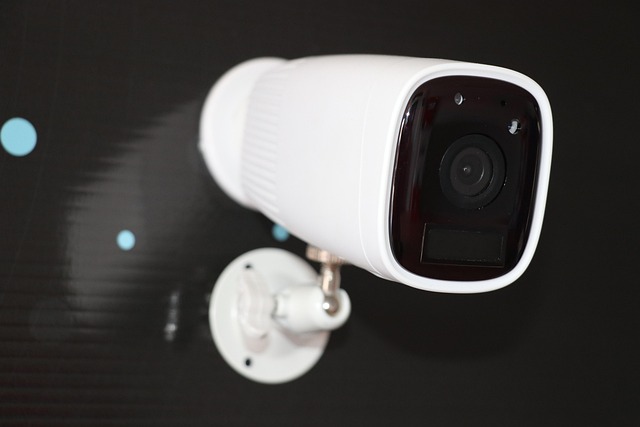
Radar technology revolutionizes intrusion detection with long-range surveillance, continuous monitoring, and advanced signal analysis, offering accurate, round-the-clock security. Despite implementation challenges like range, sensitivity, and data management, ongoing advancements promise enhanced accuracy, extended ranges, and intelligent IDS integrating machine learning and IoT for comprehensive protection.
In an era where security threats span vast territories, radar-based intrusion detection systems emerge as a robust solution. This article delves into the potential of radar technology for monitoring expansive areas, highlighting its advantages over traditional methods. We explore the implementation challenges and future innovations that could revolutionize large-scale surveillance. By harnessing the power of radar, we can enhance security measures, ensuring peace of mind in even the most extensive landscapes.
Radar Technology for Intrusion Detection: A Powerful Tool
Radar technology has emerged as a powerful tool in the realm of intrusion detection, offering unprecedented capabilities for securing expansive areas. Unlike traditional methods reliant on visual or heat-based sensing, radar systems employ electromagnetic waves to penetrate obstacles and detect intrusions with remarkable accuracy. This non-intrusive approach allows for continuous monitoring without obstructing fields of view, making it ideal for vast territories where comprehensive surveillance is essential.
Radar-based intrusion detection systems (IDS) utilize advanced algorithms to analyze reflected signals, enabling them to distinguish between authorized personnel and potential threats. Their ability to operate in diverse weather conditions and during low-visibility scenarios enhances their effectiveness, ensuring round-the-clock protection. With the capacity to cover extensive zones with minimal false alarms, radar technology is revolutionizing security measures for critical infrastructure, borders, and expansive industrial sites.
Advantages of Using Radar for Large Area Surveillance
Radar technology offers significant advantages for intrusion detection in expansive areas, making it a valuable asset for security professionals. One of its key strengths is long-range surveillance capabilities; radar can effectively monitor vast territories with minimal false alarms, thanks to its ability to detect objects at distance and through various weather conditions. This feature is particularly beneficial for large open spaces like fields, forests, or industrial complexes where traditional visual monitoring might be limited.
Additionally, intrusion detection systems based on radar provide continuous and real-time monitoring, ensuring rapid response times to potential threats. Unlike camera-based systems that rely on clear line-of-sight views, radar can penetrate darkness, smoke, and other obstructions, offering around-the-clock protection. This technology’s versatility and reliability make it an attractive solution for enhancing security in expansive areas, providing a robust layer of defense against unauthorized access or suspicious activities.
System Implementation and Challenges in Expanding Areas
Implementing radar-based intrusion detection systems for expansive areas presents unique challenges. While these systems offer robust real-time monitoring, their effectiveness in large landscapes can be hindered by several factors. One primary challenge is range and sensitivity; detecting intrusions over vast distances requires highly sensitive radars capable of distinguishing between objects, especially when signal reflections from terrain or weather conditions could lead to false alarms.
Another significant consideration is system integration and data management. In expansive areas, multiple radar sensors may be needed to cover all zones effectively. Fusing data from these sensors while ensuring real-time processing for timely intrusion alerts demands sophisticated networking and data analytics infrastructure. Additionally, power supply and maintenance logistics must be carefully planned for remote or hard-to-reach locations, making system implementation more complex yet crucial for comprehensive intrusion detection.
Enhancing Security: Future Prospects and Innovations
The future of intrusion detection systems looks promising, with advancements in radar technology opening up new possibilities for securing expansive areas. By leveraging innovative radar-based solutions, security professionals can enhance their ability to detect and respond to potential threats in real time. These cutting-edge systems offer improved accuracy and longer detection ranges, ensuring that even the most remote regions are monitored effectively.
With ongoing research and development, we can expect to see more intelligent intrusion detection systems that employ machine learning algorithms for pattern recognition. This allows for adaptive behavior, where the system learns from past data to identify anomalies more efficiently. Additionally, the integration of Internet of Things (IoT) devices will enable a network-centric approach, providing a comprehensive security framework that is both interconnected and responsive.
Radar-based intrusion detection offers a robust solution for securing expansive areas, leveraging advanced technology to provide continuous monitoring. By harnessing the advantages of radar, such systems can offer comprehensive coverage, superior through-the-weather performance, and low false alarm rates. While implementation challenges exist in large-scale deployments, ongoing innovations promise enhanced security with improved accuracy and efficiency. As we look ahead, future advancements in radar intrusion detection systems will play a pivotal role in safeguarding vast territories, making them an indispensable tool for comprehensive security solutions.